
Warehouse Cleanout Checklist
Warehouse clearance is planned rather than booked. On a live site the constraints are operational and safety-related, and both need settling before a crew arrives.
Call (682) 432-7401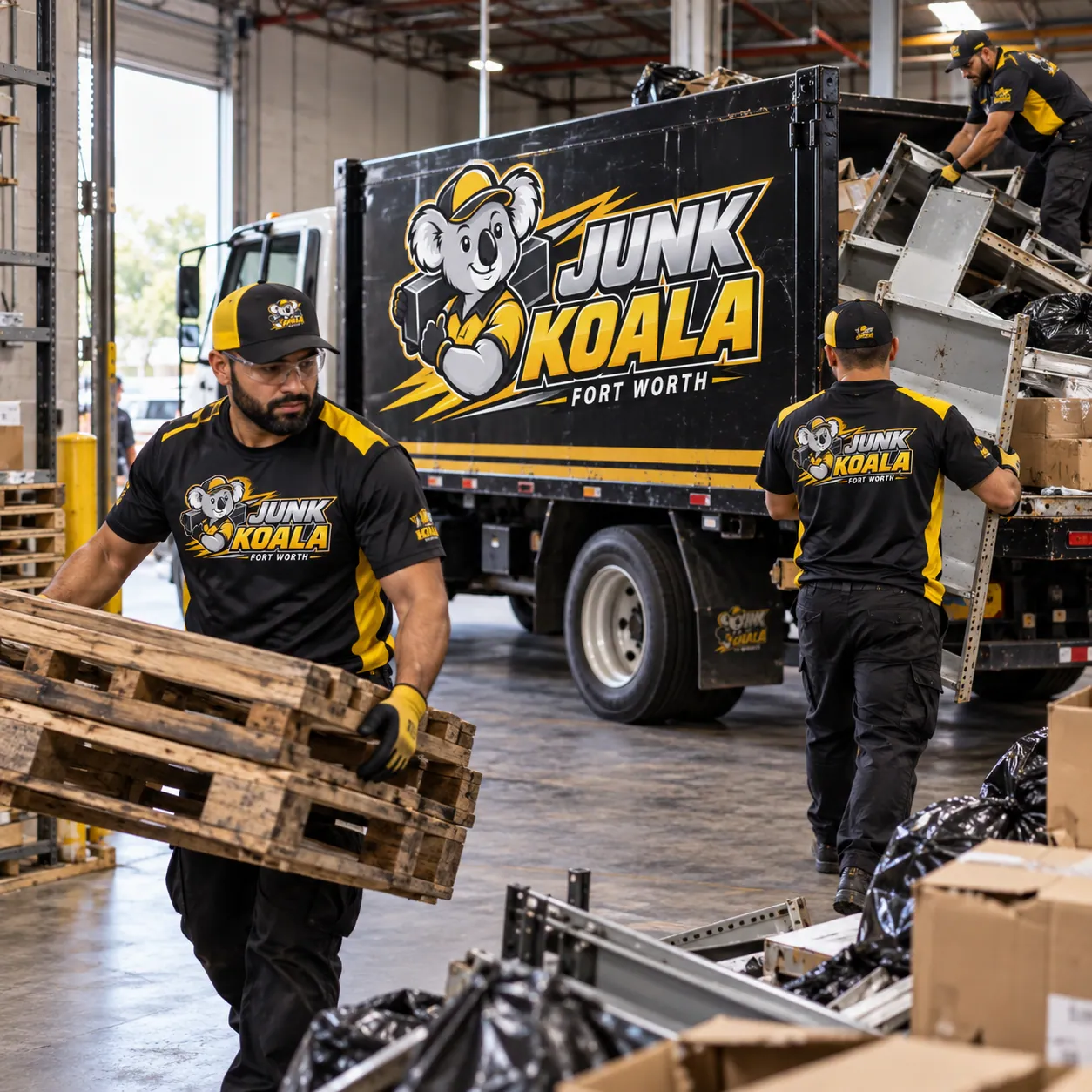
Decide first whether the operation stops
Everything follows from this. A clearance in an empty building for handback is a straightforward volume job with a deadline. A clearance around a running operation is a series of constrained sessions inside defined areas.
The second is more common and takes longer, because there is a limit to how much can be moved without interrupting receiving, picking and dispatch.
Most live-site clearances run across several visits rather than one, and planning it that way from the start works considerably better than discovering it halfway through day one.
Before the crew arrives
- 1
Define the area
Physically marked. A vague verbal scope on a large floor is how the wrong racking gets cleared.
- 2
Empty the bays
Anything being kept out of the shelving first. Crews should not be handling your stock.
- 3
Settle the racking question
Light racking we take down. Tall or braced systems need a specialist. Confirm which before the day.
- 4
Arrange induction and access
Site induction, PPE requirements, dock allocation and gate access.
Safety items that stop a job if unresolved
Every one of these has halted a clearance somewhere.
- Racking that is braced, tall or tied to a mezzanine
- Anything within sprinkler clearance distance
- Unlabelled drums or containers
- Equipment that has not been isolated
- Fire exits and routes that would be blocked
- Forklift traffic crossing the work area
What comes out, in the usual order
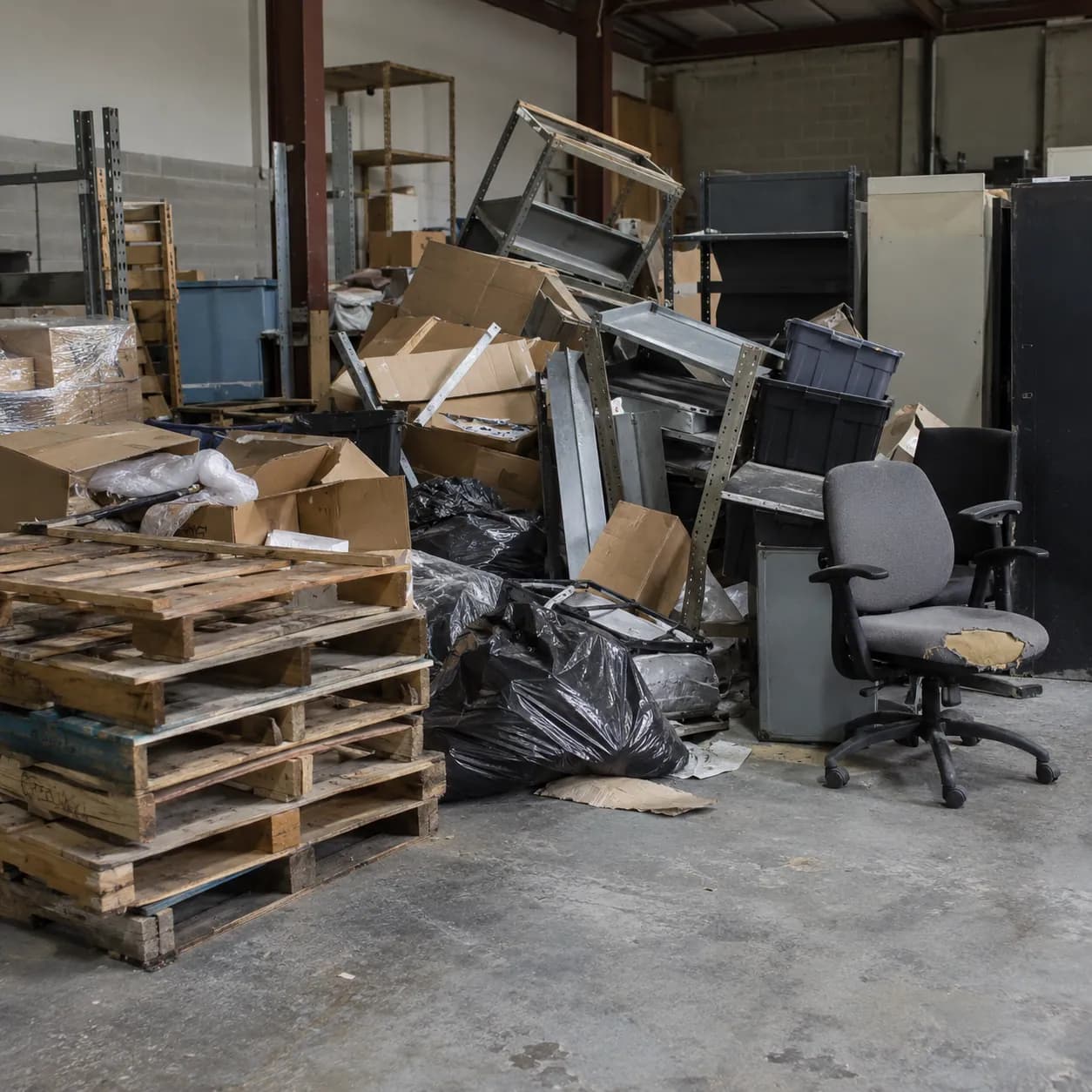
Loose material first — pallets, packaging, banding, damaged totes. It is the highest volume, the fastest to move and it creates working space for everything after it.
Then furniture and equipment: mezzanine offices, workbenches, break room contents, obsolete equipment.
Shelving and racking last, once the bays are empty and the floor around them is clear. Attempting racking first, with material still on it and no room to work, is how people get hurt.
- Loose material and packaging first
- Furniture and equipment second
- Shelving and racking last
- Floor swept as each area completes
FAQ
Related questions
- Can a warehouse be cleared without stopping operations?
- Usually, working in defined areas across several visits. It takes longer than clearing an empty building but it avoids shutting anything down.
- Will you take down our pallet racking?
- Light, low-bay and free-standing systems often. Tall or braced systems need a specialist rack dismantler, and we will tell you which yours is from photographs beforehand.
- What will you not take?
- Chemicals, solvents, fuels, oils, batteries, unreclaimed refrigerant units and anything regulated. Non-hazardous business waste is what we handle.
- Do you work weekends?
- Yes, and for many sites weekends are the only practical window. It is a standard arrangement rather than an exception.
Ready when you are
You point. We haul. That is the whole arrangement.
Pick a pickup window online, or send a few photographs and get a free quote back first. Homes or businesses, one item or a whole property.
Or call (682) 432-7401
The Fort Worth branch
Junk Koala Fort Worth
2001 Beach St, Ste 524
Fort Worth, TX 76103