
What to Do With Remodeling Debris
Most remodel debris is straightforward. A small portion of it needs testing before anyone touches it, and a smaller portion is worth more than the truck that would take it away.
Call (682) 432-7401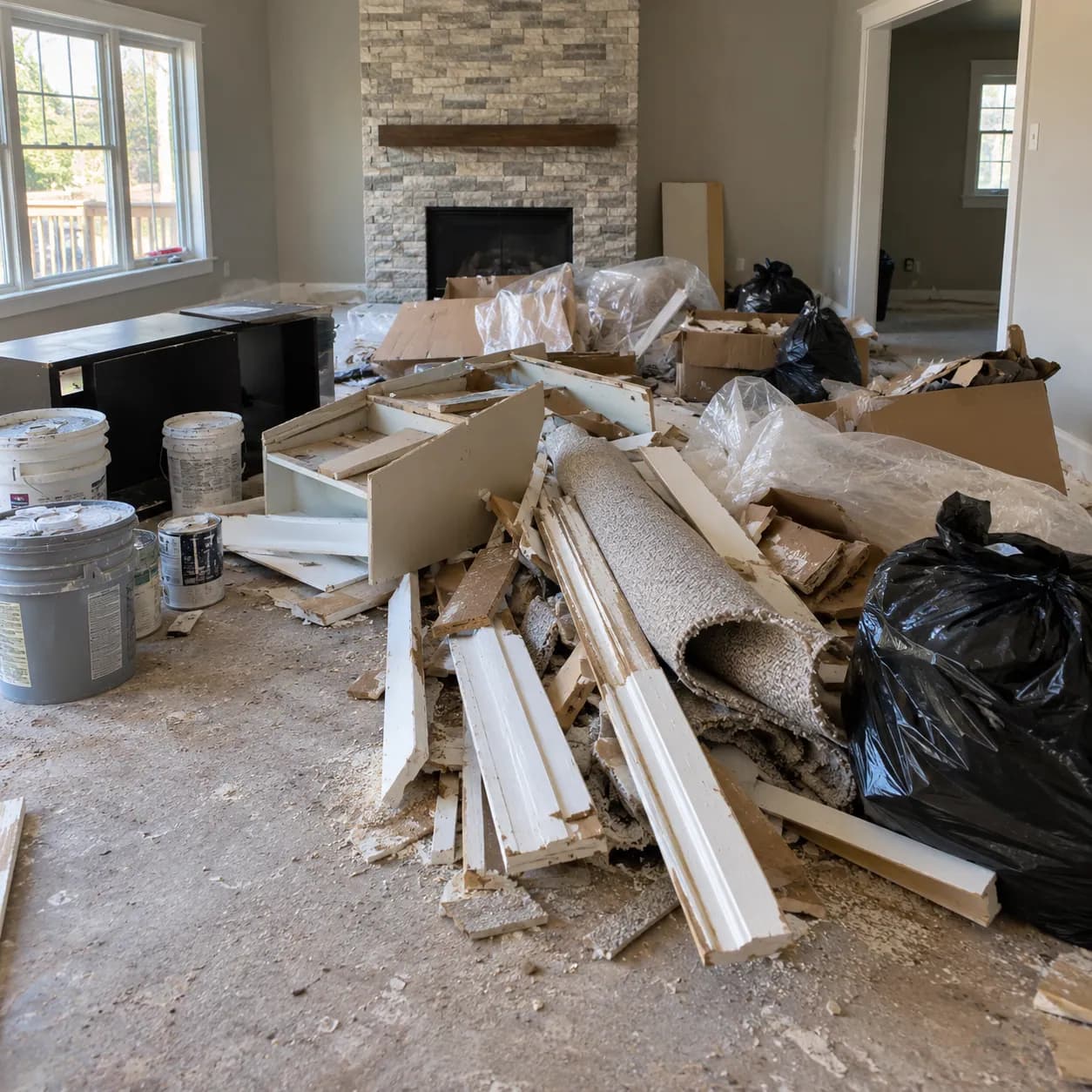
Sort it into three, not one
Almost everyone treats remodel debris as a single pile, and that loses money at one end and creates risk at the other.
The three categories are: things with residual value, things that need testing before disturbance, and everything else. The third category is the vast majority and it goes on a truck without further thought.
The first two are worth five minutes of attention before demolition starts, because after demolition it is too late for both.
Worth pulling out before demolition
Solid wood cabinet runs
Building reuse centers take these if removed intact. Pried off in pieces, they are worth nothing.
Learn morePeriod fixtures and hardware
Older Fort Worth homes hold doors, hardware and light fittings with genuine architectural salvage value.
Working appliances
Anything functional coming out of a kitchen has a donation or resale route.
Solid interior doors
Salvage yards take these. Hollow-core doors have no market.
Clean dimensional lumber
Long clean lengths are reusable. Short offcuts and anything with fixings are not.
Intact plumbing fixtures
Clawfoot tubs and cast iron sinks in particular have a resale market.
The category that needs testing first
Fort Worth has a great deal of housing stock built before the early 1980s, and in that stock a specific set of materials may contain asbestos: nine-inch floor tile, the black mastic under it, some sheet vinyl backing, popcorn ceiling texture, and pipe insulation.
None of that is dangerous while it is intact and undisturbed. All of it becomes dangerous when someone takes a scraper to it.
Testing is inexpensive and quick relative to the alternative. If the property is that age and the material has not been tested, do not disturb it, and do not let a contractor persuade you it is probably fine.
- Nine-inch floor tile and black mastic
- Older sheet vinyl and its backing
- Popcorn ceiling texture pre-1980s
- Pipe and duct insulation
Keeping the site workable
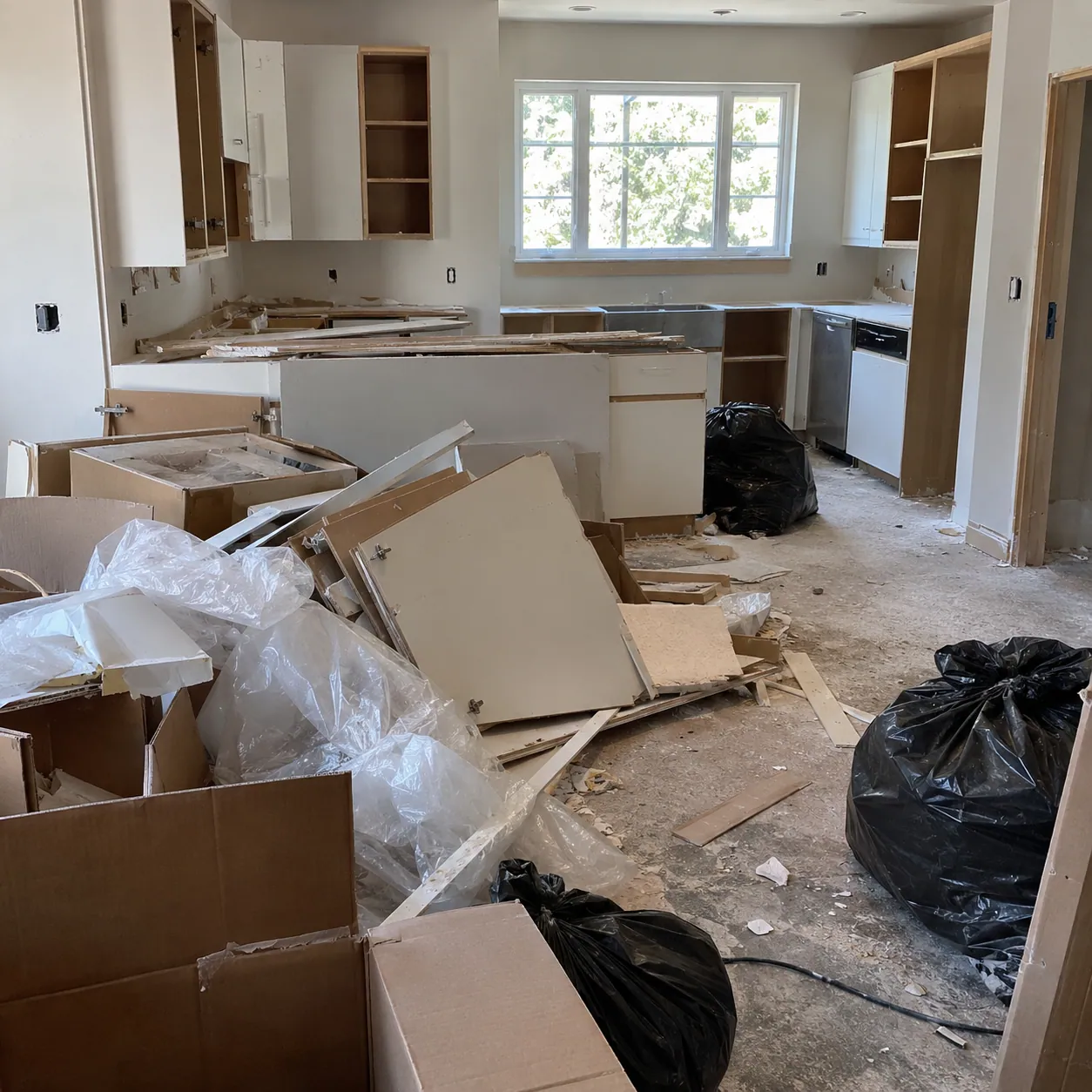
The operational habits that separate a smooth remodel from a chaotic one.
- Clear debris the day it is generated, not the week
- Bag dusty material rather than piling it loose
- Protect the carry route before anything moves
- Never stage debris in a room the next trade needs
- Book clearance at the end of each phase, not the project
- Keep hazardous items separate from the start
FAQ
Related questions
- What can actually be salvaged from a remodel?
- Solid wood cabinets removed intact, period fixtures and hardware, solid doors, working appliances, clean long lumber and intact plumbing fixtures. All of it has to be decided before demolition, not after.
- How do I know if something contains asbestos?
- Testing. Age is an indicator — pre-1980s stock is where the risk sits — but only a test tells you. It is inexpensive, quick and far cheaper than the alternative.
- How often should debris be cleared during a remodel?
- At the end of each phase as a minimum. Strip-out, rough-in, then before finishes. Leaving it to the end means living with it and usually needing multiple loads anyway.
- Can you take debris from an active site?
- Yes, and it is the better way to run it. Debris off site between trades keeps the working area usable.
Ready when you are
You point. We haul. That is the whole arrangement.
Pick a pickup window online, or send a few photographs and get a free quote back first. Homes or businesses, one item or a whole property.
Or call (682) 432-7401
The Fort Worth branch
Junk Koala Fort Worth
2001 Beach St, Ste 524
Fort Worth, TX 76103